Good News · 07/16/2026, 08:04 PM
Sugar Detected in Interstellar Space for the First Time – A Milestone for Astrobiology
Scientists have detected a type of sugar for the first time in the center of the Milky Way, providing new insights into the chemical building blocks of the universe.
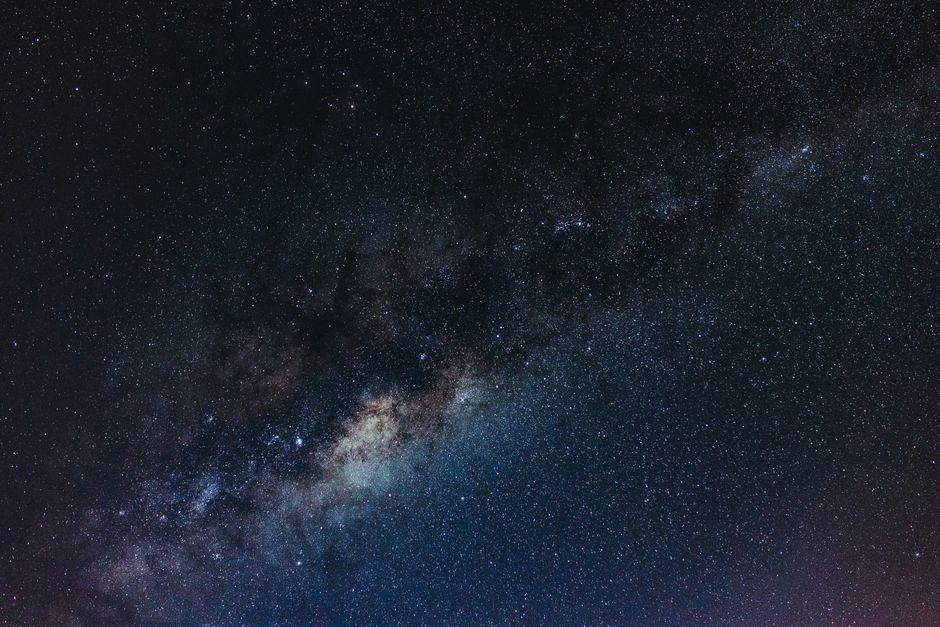 Bild: Jonathan Borba / Pexels · Pexels · Pexels Lizenz: kostenlos nutzbar, Attribution freiwilligAnzeige / Affiliate möglich. Für dich entstehen keine Mehrkosten.
As Good News Network reports (https://www.goodnewsnetwork.org/would-you-like-sugar-with-your-stars-sugar-detected-in-interstellar-space-for-the-first-time/), researchers have discovered a type of sugar in interstellar space for the first time. Specifically, it is erythritulose, a simple sugar that is found, among other places, in raspberries. This discovery was made in the gas and dust nebula at the center of our Milky Way and marks a significant advance in the study of the chemical composition of the universe.
What was discovered?
Erythritulose is a sugar that had previously only been detected on asteroids within our solar system. The new study now shows that this organic compound also exists far beyond our solar system—in the interstellar matter surrounding stars and planetary systems. The researchers used high-resolution telescopes and spectroscopy to identify the characteristic signals of this sugar in the electromagnetic spectrum.
Why is this important?
The discovery of sugar in interstellar space is a significant step for astrobiology and the study of the origins of life. Sugars are essential building blocks for complex organic molecules, including nucleic acids such as RNA and DNA, which are fundamental for life on Earth. The fact that such molecules are already present in the star clouds from which new stars and planets form suggests that the conditions for life in the universe may be more widespread than previously thought.
Context and outlook
Until now, sugars have mainly been found within our solar system on comets and asteroids. The new observation expands our understanding of how organic molecules are distributed throughout the cosmos. It supports the hypothesis that the building blocks of life did not only originate on Earth but may have already existed in interstellar space and were delivered to young planets via comets or meteorites. These findings could inspire future research into the origins of life and the search for extraterrestrial life.
Scientists plan to investigate additional sugars and more complex organic molecules in other regions of the Milky Way to gain a more comprehensive picture of the chemical diversity in the universe.
Conclusion
The first-ever discovery of sugar in interstellar space shows that the fundamental building blocks of life may be universally distributed. This opens new perspectives for astrobiology and the question of how life can arise in the cosmos. Research is thus only at the beginning of an exciting journey that will deepen our understanding of the universe and our own origins.
Warum das wichtig ist
The discovery of sugar in interstellar space expands our knowledge about the distribution of vital organic molecules in the universe and supports the idea that the building blocks of life could be widespread. This is an important advancement for astrobiology and the search for extraterrestrial life.